
Precious Peatlands: Netherlands
Wetlands, Witte Wieven, and Water Control

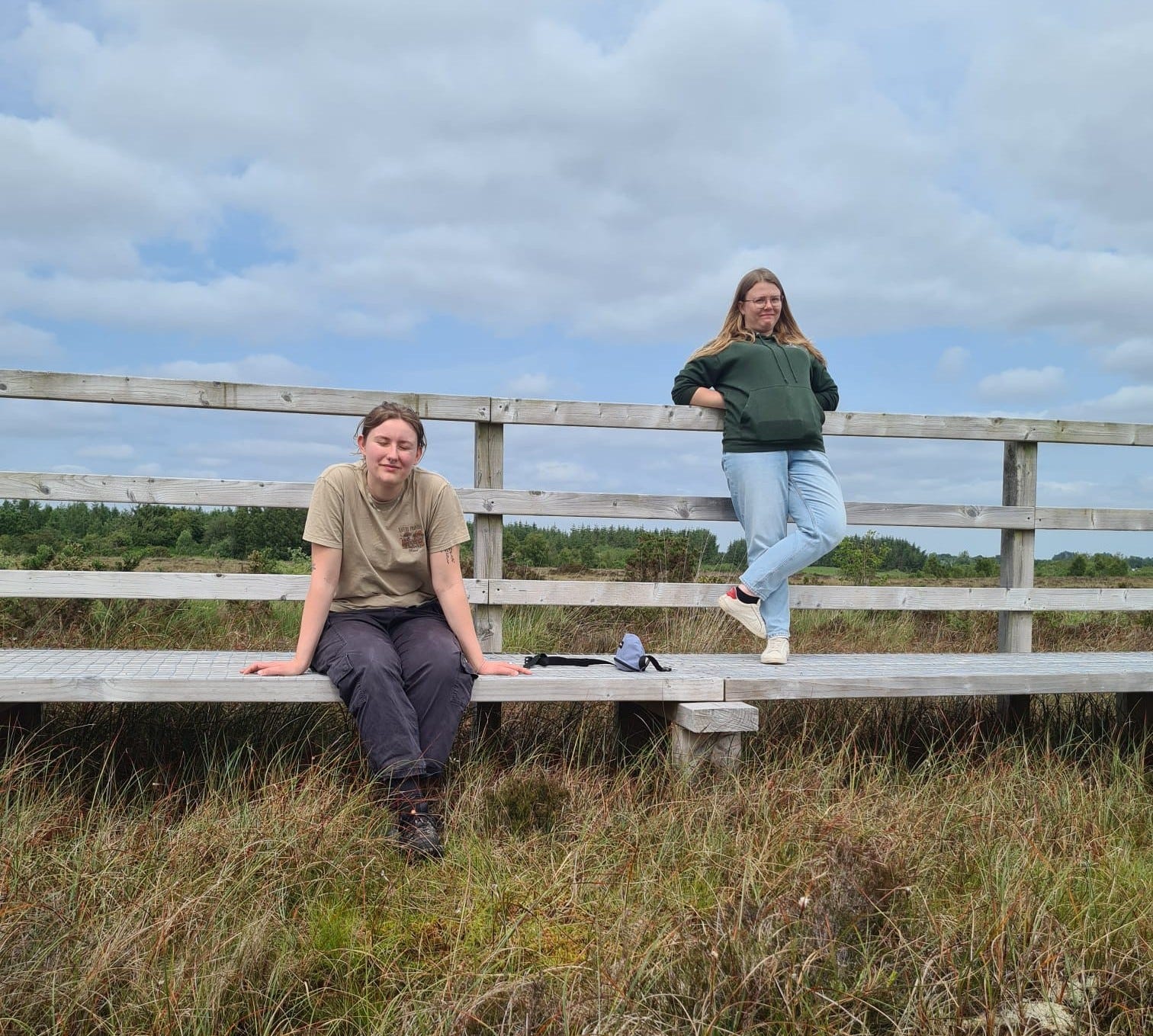
Hallo! And welcome back to Echoes from the Bog coming back to you with another installment of Precious Peatlands. Today we are journeying together to the site of some of the most historically significant and globally-impactful peatland cultures: The Netherlands. We will be exploring some interesting aspects of Dutch peatland relationships and history, including folklore tales, drainage and the artist’s approach to these landscapes. But first, we’ll gather some context and historical knowledge about the critical role peatland ecosystems have played in the life and legacy of the Netherlands.
The history of the Netherlands is a history of peatlands. The two stories cannot be told without one another. The story of Dutch expansion onto peatlands starts as early as the 8th century, when people began to establish stable settlements along peatland waterways. When populations began to grow out of sparse settlements they moved and expanded, and surrounding peatlands were settled and transformed. Even before largescale historical settlement, it is widely accepted that peatlands played a special role in ancient cultures as sites of spiritual significance.
The territory of the Netherlands is defined by its low-lying, water-logged nature. In fact, if population growth had never pushed populations on to the peatlands of what we now call the Netherlands, all of the country would have remained a vast, sparsely populated wetland. But, populations did grow, industry expanded, and the Netherlands was born, all atop some of the world’s most peat-rich soils. The more you learn, the more the old saying starts to make sense: God created the world, but the Dutch made the Netherlands.
Large scale peatland reclamation didn’t begin until around 1000 AD, in a period called The Great Reclamation, a time when more extreme population growth created an urgent need for more agricultural land, and thus peatlands were dug up and transformed. From this point onward, peatland development intensified, clearing the land for settlement and agriculture. Peat extraction escalated as it became a main resource for Dutch families and industry alike, and peat cemented itself as a cornerstone of the Dutch economy. As industry and settlements developed and the Netherlands became the Netherlands, the destruction and drainage of wetlands spread. Over time this has resulted in our present condition, where an estimated 90% of Dutch raised bogs have been eliminated through exploitation for farming and peat extraction, with the remaining 10% being under intense pressure from threats of climate change and agriculture.
The story of peatland transformation in the Netherlands is crucial to understanding the landscape itself. The very shape and formation of the modern landscape – all that we could easily accept as ‘natural’ from the windows of the intercity train – is itself a byproduct of the drainage: ditches, lakes, plassen and polders are results of peatland development. This story is not just one of development, of separating wet from dry, of transforming wetlands into something more easily usable. It is also the story of what we now face, the intersecting and overlapping myriad of consequences of this development. Aside from the greenhouse gas emissions and carbon sequestration losses characteristic of peatland extraction around the world, a characteristically Dutch effect of extensive peatland drainage is the phenomenon of subsidence. Subsidence is the lowering of the ground level that takes place when water is removed from peatlands, or wetlands generally. Picture the squeezing of a sponge: without water to fill the sponge and give it a form, the sponge shrinks and shrivels, as does the drained land. You can spot evidence of subsidence all over the Netherlands, from the below-sea-level status of Vondelpark, to the lopsided houses in Amsterdam that seem to be falling in slow motion. In fact, the Dutch term “polder” which refers to land reclaimed from water, synonymous with the extensive land reclamation efforts of the Netherlands, is an effect of subsidence. As ground levels drop, pockets of land are able to be ‘freed’ from their watery-entanglements. Widespread subsidence greatly increases an area’s flood risk, a problem the Netherlands knows well. Roughly 65% of the country would be underwater at high tide without the constant water management technologies, including pumps, dikes and drainage systems which must be constantly maintained in order to keep the wetlands from reclaiming their historic grounds.
Although peat extraction is now highly regulated throughout the Netherlands due to the disastrous environmental effects of its extraction, the Dutch horticultural industry still depends on peat for its potting soils, and the Netherlands persists as one of the world’s largest importers of peat soil. What is commonly told as a contemporary tale of domestic environmental protection hides a more complicated story: the Netherlands imports peat from nations with less strict regulations in order to keep up domestic standards while never fundamentally altering the dependence on peat, and never interrupting the disastrous climatic effects of its extraction, simply shifting these effects outside of national borders.
The story of the Dutch and their peatlands is too enormous to cover in an introduction to our podcast. It includes a myriad of stories untold here – the history of Dutch peat colonies, the growth of an internationally renowned water-management industry, the legacy of tulips and horticulture, traditional rural fuel, and ancient spiritualities. Although the history of these encounters cannot be easily summarized here, we hope that this introduction has, at least, indicated the grand scale of entanglement between the Netherlands and their peatlands. So read on, dear peat-lover, for a more detail-oriented and personal reflection from Isis and Yanna who approach peatlands in unique, impactful and creative ways.
To hear the rest of the episode click on the link!
Hey, are the podcast going to be available on other platforms? Like apple music or Podimo? Would love to listen!